AI & Subscriber Intelligence
Noosphere NewPrivate AI that acts in the subscriber's interest Cheyenne Data Center NewDedicated colocation footprint for AI fine-tuning
Hardware & Licensing
Server Solutions & MS LicensingEnterprise hardware + SPLA/CSP/OEM licensing PC-3000 Data RecoveryACE Lab recovery & forensics systems
Telecom Software
SDMS + DSPNew revenue growth for operators Deep Packet InspectionOptimize networks, elevate revenue
Next-Gen Infrastructure
KosmoCoreTokenized core network for MVNOs KOSMORelay CashNext-gen SIM wallet payments
Support
Portal login
AI & Subscriber Intelligence · New

Noosphere

Most telecom AI is built to answer one question: what can we sell this subscriber next. Noosphere is built to answer a different one — what does this subscriber actually need — and treats the answer to the first question as something that follows from getting the second one right. It's a private AI layer that runs inside your own network and billing data, acts in the subscriber's interest by design, and still moves your churn, ARPU, and NPS numbers, because trust turns out to be the more profitable strategy.

Data Labs AI product lead reviewing a subscriber intelligence dashboard
Isometric illustration of a glowing neural-network sphere floating above a platform, representing the Noosphere AI layer

Customer Value + Operator LTV + Trust − Intrusiveness − Risk. Not: maximize ARPU.

The objective function Noosphere is optimized against — a subscriber-first tradeoff, not a sales script.
Why a different objective

The same data, pointed at trust instead of extraction.

An operator sees more about a subscriber's real situation than almost any other company they deal with — billing, location, device, usage, support history. Pointed at maximizing ARPU, that turns into more aggressive upsell. Pointed at the subscriber's actual interest, the same data becomes a reason to trust the operator with more of their spend voluntarily. Noosphere is built for the second path — it's the more durable one.

Customer Twin

A continuously updated model of the subscriber's real state and needs — not a static CRM record.

Subscriber Agent

Acts on the Twin's behalf first — surfaces the cheaper plan, the unused subscription, the "do nothing" option.

Policy & Ethics Engine

Arbitrates between the two agents — blocks any action where operator interest crosses a line past subscriber interest.

Operator Agent

Pursues commercial and operational goals — churn, ARPU, network cost — within whatever the Policy Engine allows.

Exploded isometric diagram of four stacked layers connected by a central light beam, representing the Customer Twin, Subscriber Agent, Policy and Ethics Engine, and Operator Agent

Fig. 1 — The arbitration stack. Customer Twin at the base, Subscriber Agent and Operator Agent on either side of the Policy & Ethics Engine, one shared signal running through all four.

For the subscriber

An AI that saves money and catches problems, not just sells.

Financial Angel

"You've overpaid ~70 AED/month for three months — this plan actually fits your usage." Told before the bill, not buried in a statement.

Unusual Spend & Fraud Guardian

Flags roaming spikes, premium-SMS charges, subscription creep, and scam-calling patterns — signals only the operator's network can see.

Telecom Concierge

"I'm flying to Japan with my family for two weeks" becomes a concrete plan built from real usage — not a 40-tariff catalog.

Subscription Optimizer

Surfaces the streaming, cloud, and AI bundles a subscriber is paying for and barely using — including ones to cancel.

Family Intelligence

Shared data budgets, spend alerts, eSIM management, and parental controls — without turning the product into surveillance.

Digital Safety for Seniors

Consent-based pattern alerts before a risky transfer — "a few unusual events in the last 20 minutes, worth checking the recipient" — never an automatic block.

For the network experience

Noticing the problem before the complaint call.

Quality-of-Experience AI

"Video calls at home have been degrading for five evenings — it's coverage, not your device. Already optimized, or here's a Wi-Fi Calling fix."

Predictive Customer Care

Opens the support app already knowing what's wrong and when it clears — no menu tree, no re-explaining the problem.

Network Personalization

Temporary QoS shifts for what's actually happening: a gaming boost in the evening, video-call priority, a latency-sensitive profile — built directly on the DPI/PCEF layer.

Growth built on trust

The commercial upside of not being pushy.

Life-Event Assistance

Weak signals — new device, travel pattern, a second SIM — trigger one useful action, never a headline like "we noticed you're moving."

Understanding-Based Loyalty

A long-tenure subscriber's one-off bill-shock month gets a partial waiver automatically — the AI decides where a small gesture has the largest trust payoff.

Personal Digital Assistant

"Why did my bill go up?" and "What plan actually fits my family?" get specific answers built from real account data — not a generic FAQ link.

Operators also get what the subscriber never sees: churn prediction, demand forecasting, tariff-grid optimization, collections prioritization, and NPS root-cause analysis — the same Customer Twin, read from the operator's side.

How it's built

A private, sovereign AI brain — not another SaaS API call.

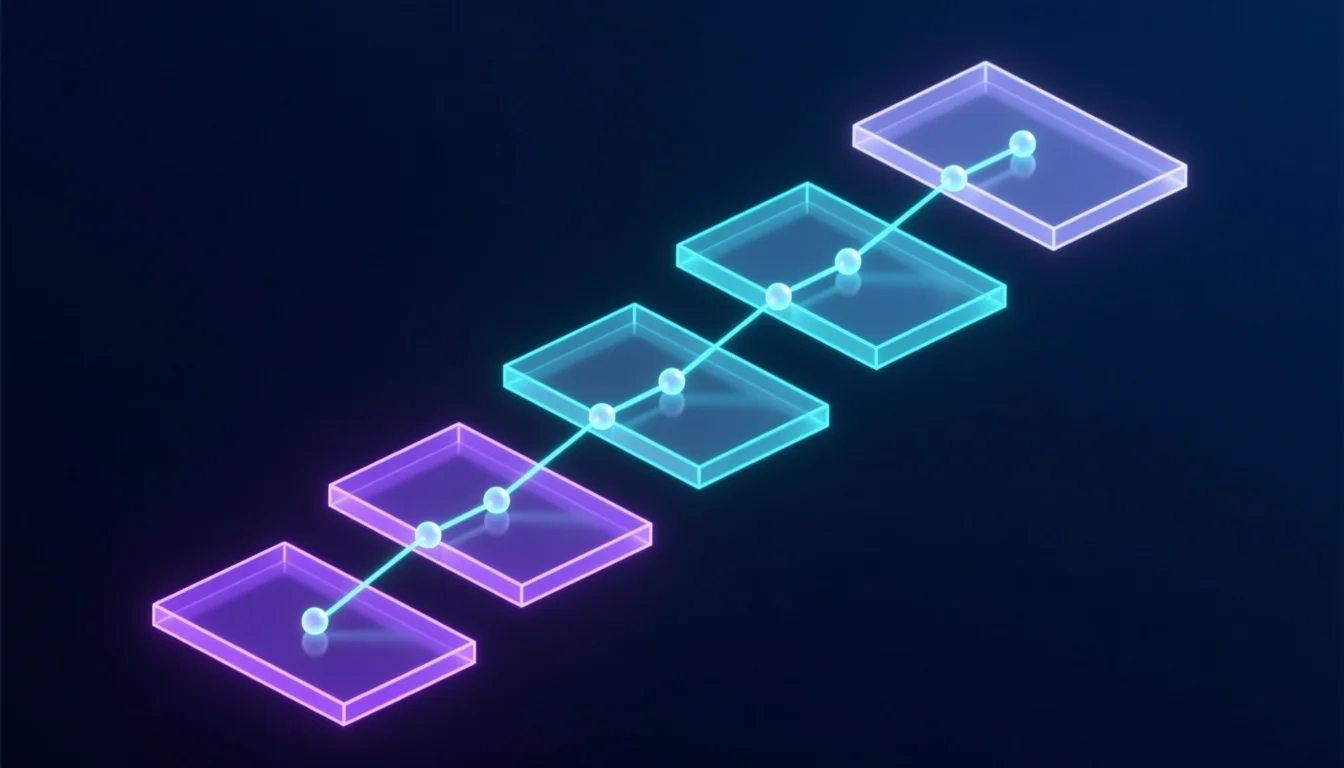
Noosphere isn't one fine-tuned LLM. It's a hybrid stack, deployed entirely inside the operator's own environment, built to turn billing, network, and CRM history into a continuously updated understanding of every subscriber.

Isometric diagram of six translucent platforms arranged in an ascending staircase, connected by a glowing light trail, representing the six-layer model stack

Fig. 2 — Six layers, one ascending pipeline. Each layer hands a sharper signal to the next — from raw language up to live policy context.

01

Foundation LLM

Language, reasoning, and explainability — adapted from a strong open-weight 30–70B model via domain adaptation and LoRA/SFT. Not trained from scratch, so it ships in weeks and stays cost-sane to run.

02

Customer Embedding Model

Builds a continuously updated digital profile per subscriber from thousands of behavioral features.

03

Time-Series & Behavioral Models

Reads the trend, not the snapshot — falling spend, changing usage, degrading coverage, a new device on the line.

04

Propensity Models

Churn, upsell, credit risk, next-best-action — scored per subscriber, updated as behavior shifts, not on a monthly batch.

05

Recommendation Engine

Turns propensity scores into one specific offer or action — not a tariff list.

06

RAG Layer

Current tariffs, policies, and CRM rules stay live in context without retraining the model every time a plan changes.

Why this is the efficient way to build it

Billions of events, not a training team the size of a hyperscaler's.

Adapt, don't retrain from scratch

An open-weight 30–70B foundation model reaches production in weeks. The operator's own event history goes where it actually moves accuracy — embeddings and feature training, not pretraining a base model.

The event history is the asset

Even a 5–20M subscriber base generates tens of billions of CDR, data, payment, and session events — more signal than most operators are currently using for anything.

One closed loop, not a new stack

Network + Billing + CRM → Customer Intelligence Model → Decision Engine → PCRF/CRM/Campaign → outcome → retrain. Sits directly on the DPI, PCEF/PCRF, and SDMS+DSP data Data Labs already routes for you.

Privacy & sovereignty

Built to never become a surveillance product.

The same depth of data that makes Noosphere useful is exactly what makes the guardrails non-negotiable. These aren't policy promises — they're architectural constraints.

Isometric illustration of a glowing translucent shield with a lock, representing Noosphere's privacy and data-sovereignty guardrails

Private, sovereign deployment

Runs on the operator's own GPU cluster or a dedicated sovereign cloud tenant — see our own Cheyenne colocation footprint. No data leaves the environment, no external API calls.

Pseudonymized by design

Behavior is stored as categories — Travel, Gaming, Streaming, Finance — not URL-level browsing history. Customer IDs are tokenized throughout.

RBAC, audit, DLP

Every access logged, every export controlled, encrypted data lakehouse — standard telecom-grade compliance posture, not bolted on after launch.

Model governance

The model is architecturally barred from surfacing raw subscriber data — a hard constraint, not a prompt instruction.

What Noosphere never does

The line the Policy & Ethics Engine won't let the Operator Agent cross.

1

No frightening insights

It will act on a signal like "usage pattern changed," it will never say "we think you're getting divorced" or "we noticed you lost your job."

2

No dark patterns

If the honest best answer is "don't buy anything," Noosphere is required to say so — a Fair AI / Subscriber Advocate mode, not an optional setting.

3

Consent-first for sensitive alerts

Elderly safety alerts and family controls run opt-in, with the subscriber or family deciding — never a silent background block on their behalf.

Illustrative scenarios

What the loop looks like in practice.

Bill-shock prevention

A postpaid subscriber's bill runs 34% over normal. Noosphere identifies the cause — a roaming session outside the usual pattern — and explains it in-app before the complaint call, with a one-tap fix for next time.

Travel concierge

Usage pattern shows an upcoming trip. The subscriber gets one message: the right roaming pack, pre-purchased data, and a temporary spend cap — not a push notification for an unrelated upsell.

Coverage fix before the complaint

Five consecutive evenings of degraded video calls at one address get flagged as a network issue, not a device issue — routed to network ops with the pattern attached, resolved before the subscriber calls in.

Bring subscriber-centric AI to your network.

Talk to us about deploying Noosphere as a private layer on top of your existing DPI, PCRF, and CRM data.